

Food Service Equipment Manufacturers

Food service equipment manufacturers produce commercial kitchen systems and tools for restaurants, institutions and hospitality operators. With a focus on equipment durability, production efficiency, safety compliance and serviceability, they support dependable kitchen performance and smoother foodservice operations.

Drago America: A Dependable Partner for Foodservice Equipment Dealers
Drago America
A Dependable Partner for Foodservice Equipment Dealers
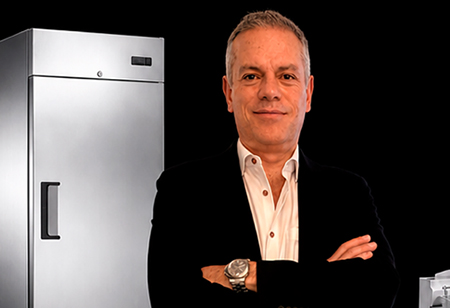
Mauricio Obregon, CEO
Independent dealers supplying commercial kitchen equipment cannot afford delays when their customers need equipment or service. The equipment has to be reliable, available when needed and backed by support that keeps downtime to a minimum. As operating costs rise and equipment reliability becomes a greater concern for restaurants, dealers need manufacturers they can count on at the time of sale and service.

Food Service Equipment Manufacturers Support Operational Excellence

Modern food businesses operate in an environment where speed, quality, and consistency shape customer expectations every day. Restaurants, institutional kitchens, catering services and hospitality facilities rely on dependable equipment to maintain efficient workflows while meeting food safety standards.

Choosing Food Service Equipment That Supports Dealer Success

Kitchen equipment purchases rarely go wrong because something was missing from the specification sheet. The problems tend to show up later, when a replacement part cannot be found, service takes too long or a delivery delay leaves a project unfinished. Restaurant operators live with the consequences, but equipment dealers are often the first ones expected to solve them. For distributors responsible for commercial kitchens, choosing the right manufacturer can therefore matter just as much as choosing the equipment itself. 

The Business Case for Food Safety
Seaboard Overseas and Trading Group
The Business Case for Food Safety
Keith Clemens, Director of Food Safety and Quality Assurance Excellence

Accountability through Food Safety

My experience in quality and food safety has fundamentally shaped my leadership approach around accountability, risk-based thinking, and leading by example. In our industry, the consequences of failure are significant, such as impacting consumer health, brand trust, and business continuity. Therefore, I prioritize building systems that are both robust and practical.

Food Service Equipment Manufacturers Info

Q1
What Do Top Food Service Equipment Manufacturers Do?
Top Food Service Equipment Manufacturers create and support equipment for professional kitchens and other foodservice settings. Their products include solutions for cooking, refrigeration, prep, storage, serving, and sanitation. Good suppliers also help dealers, operators, and project teams figure out capacity, installation, maintenance, and long-term costs. This matters because commercial kitchen equipment needs to work reliably in tough conditions while keeping food production safe, efficient, and consistent.
Q2
What Products and Services Are Commonly Included in Food Service Equipment Manufacturing?
Top Food Service Equipment Manufacturers may produce ranges, ovens, fryers, griddles, refrigeration units, prep equipment, warming systems, display equipment and other commercial kitchen equipment. The wider offering can also involve parts availability, technical documentation, warranty administration, training and maintenance support. For buyers, the value of foodservice equipment extends beyond the initial specification. Compatibility with kitchen layouts, utility requirements, cleaning routines, service access and anticipated production volume can influence whether equipment remains practical throughout its working life.
Q3
What Is Driving Demand for Food Service Equipment?
Demand for Top Food Service Equipment Manufacturers is shaped by restaurants, hospitality groups, institutional kitchens and other operators seeking dependable equipment while managing labor, energy, maintenance and space constraints. Kitchen renovations, new openings, replacement cycles and evolving menu formats also support ongoing demand. Operators increasingly look for foodservice equipment that can improve throughput, simplify routine tasks and reduce avoidable disruption. Rather than relying on broad market statistics, the category can be understood through these practical pressures on commercial food operations.
Q4
How Are Top Food Service Equipment Manufacturers Evaluated?
Top Food Service Equipment Manufacturers are typically evaluated on equipment quality, durability, safety, serviceability, product availability and the strength of after-sales support. Decision-makers may also compare total ownership cost, energy use, warranty terms, replacement-parts access and technical assistance. Restaurant equipment manufacturers that offer clear specifications and dependable support can make procurement and maintenance planning easier. Evaluation should therefore consider both how the equipment performs when new and how efficiently it can be maintained, repaired and supported over time.
Q5
How Do Food Service Equipment Manufacturers Create Operational Value?
Top Food Service Equipment Manufacturers create value when their products help kitchens maintain output, control operating costs and limit downtime. Well-matched commercial kitchen equipment can improve workflow, support consistent preparation and reduce the operational friction caused by unreliable or difficult-to-service assets. Buyers also benefit when foodservice equipment is straightforward to clean, maintain and integrate with existing kitchen processes. Long-term value depends on the balance among purchase price, expected service life, maintenance requirements, operating efficiency and access to dependable support.
Q6
What Role Do Innovation and Technical Expertise Play in Food Service Equipment?
Innovation helps Top Food Service Equipment Manufacturers respond to changing expectations for efficiency, automation, connectivity, sanitation and easier maintenance. Technical expertise is equally important because equipment must operate safely within real kitchen conditions, not only meet a specification on paper. Advances may include improved controls, sensors, energy-management features, modular components and service-friendly designs. For restaurant equipment manufacturers, useful innovation is technology that improves practical performance, simplifies operation or maintenance and helps commercial kitchens adapt without adding unnecessary complexity.
Top