
THANK YOU FOR SUBSCRIBING
× 
Food and Beverage Tech Review Weekly Brief
Be first to read the latest tech news, Industry Leader's Insights, and CIO interviews of medium and large enterprises exclusively from Food and Beverage Tech Review
Food and Beverages Tech Review: Specials Magazine
Commercial kitchens and galleys generate enormous volumes of food waste every day. In large-scale operations such as cruise ships, hospitals, universities, and corporate campuses, discarded food is measured in tons. This creates logistical, financial, and environmental burdens that extend far beyond the kitchen. When this waste is hauled to landfills, it decomposes anaerobically and releases methane, a greenhouse gas far more potent than carbon dioxide. For organizations facing increasing pressure to reduce emissions, control costs, and document environmental performance, food waste has become an operational issue that can no longer be ignored. This is the challenge Recoup Technologies has solved. Through its BioHiTech line of aerobic food waste digesters, Recoup provides organizations with a practical, in kitchen solution that addresses food waste at the moment and where it is created. The Recoup Biotech Digester reduces dependence on hauling and landfill disposal, lowers associated emissions, and replaces antiquated waste-handling practices with measurable, data-backed outcomes. As a result, Recoup has become a technology partner for many organizations seeking sustainability gains alongside operational clarity and financial efficiency. Founded to solve food waste at its source, Recoup applies a proven biological process known as controlled aerobic digestion to the problem of waste practices historically managed through transport, storage, and disposal. Unlike landfill-bound waste streams, where food decomposes in oxygen-free environments and produces methane, Recoup’s digesters use oxygen-rich microorganisms similar to those used at waste water treatment plants that rapidly break food waste down into liquid effluent suitable for sewer discharge. This creates a closed, on-site process that entirely removes food waste from the landfill pathway.
Top Beverage Alcohol Brands Solution 2026
When the pandemic reshaped how beverage alcohol brands connected with consumers, access expanded faster than insight. Direct-to-consumer channels accelerated, regulations eased, and distilleries became both experiential destinations and digital storefronts. Yet as transactions increased, a deeper inefficiency emerged. Brands could sell, but they struggled to connect experiences, data, and demand into a system that sustained growth. Brandjam was founded to close that gap. Built specifically for the beverage industry, Brandjam is a platform that centralizes fragmented data sources, captures first-party consumer insights, and connects those insights directly to sales, retail, and distribution execution. The result is a modern operating layer that allows brands to move faster, see demand more clearly, and turn consumer interactions into measurable growth. View from Inside the Industry Brandjam’s origins are closely tied to founder Dan Robbins’ experience inside the system he set out to modernize. Trained as a data scientist, Robbins spent over a decade in the beverage alcohol industry, including serving as the Head of Data Science at Brown-Forman and Head of Commercial Analytics and Data Strategy at Provi. These positions offered firsthand exposure to how major brands approached strategic decision-making. .

Food Safety And Quality Assurance Consulting Company

Food safety isn’t what it was five years ago. New regulations, evolving industry standards, and emerging processing technologies create a constant need for adaptation. But here’s the challenge—most food businesses are so focused on daily operations that keeping up with compliance changes and continuous improvement often takes a backseat. The same team managing production can often need helping hands with tracking the regulatory world and implementing the necessary updates. That’s where a trusted partner becomes critical—bridging the gap between compliance and innovation, ensuring businesses don’t just keep up, but stay ahead. ASC Consultants provides the critical external oversight food businesses need to maintain the highest standards of safety, quality, and compliance. Specializing in fractional QA support, ASC goes beyond traditional consulting by actively assessing internal processes, conducting internal audits, and implementing improvements with speed and efficiency. Their experienced, hands-on, collaborative approach ensures that companies meet regulatory requirements while driving continuous improvement in their food safety programs. By providing expert guidance and supplemental resources, ASC helps businesses strengthen their internal monitoring systems and adapt to evolving industry standards with confidence. “Consumers expect safe and high-quality products, and we add the most value by helping businesses validate their processes, analyze data and implement lasting, organization-wide programs,” says Adrienne Steele, CEO and Founder of ASC Consultants. The company provides comprehensive services within the FDA-regulated and food service industries, specializing in documentation, implementation, and risk mitigation. With teams on the ground in Texas, New York, and California—including Los Angeles—it understands wholesale manufacturing, food service, and commissary operations. Their expertise lies in implementing protocols and programs focused on environmental monitoring, sanitary practices, and hygienic review gap assessments. Investors and companies alike rely on ASC’s services to strengthen quality departments and enhance overall food safety. Beyond compliance, ASC focuses on the human element in food safety, ensuring that teams understand the ‘why’ behind protocols. Their highly trained professionals integrate seamlessly into client operations, offering support in product development, new line validation, and regulatory adherence. By delivering reliable, efficient, and well-structured programs, ASC empowers clients to focus on core business priorities while maintaining excellence in GMP and GFSI compliance. This client-centric approach begins with pre-interviews and gap assessments to identify priorities, deliverables, and timelines. Through this initial phase, the company builds trust, shares its working methods, and evaluates the client’s programs. Following the assessment, ASC develops a structured roadmap and recommendations report tailored to objectives in R&D, GMP-to-GFSI transitions, quality management, or facility openings. The highly structured onboarding process includes clear responsibilities, target dates, and milestones tracked via completion reports and KPIs for transparency. It also assists clients in developing and reporting quality KPIs to measure success, ensuring effective implementation and alignment with goals.
CXO INSIGHTS

The Transition to a More Eco-friendly Business Process
Alex Perez, COO, Franchisor, Restaurant Operations Management, Executive, Fresh&Co NYC

How Going Digital Impacts the Food & Beverage Community
Brian Wilkinson, Chief Information Officer, KeHE Distributors

The Art of 'Hybrid' Restaurant Management
Steve Smyth, Director of Restaurant Technology, Taco John’s International

Proactively Welcoming the Food Evolution
Scott M. Danchise, Food Service Director, The Nutrition Group

The Strategic Role of Sanitation in Food Manufacturing
Nicole Pool, Sr. Director, Novus Foods

Transforming the Beverage Alcohol Industry
Todd Morillo, Director of Sales Technology, Eagle Rock Distributing Company

Enhanced Precision Agriculture using Cloud Based AI
Enrique Leon, AI Enterprise Architect, American Sugar Refining Inc


IN FOCUS
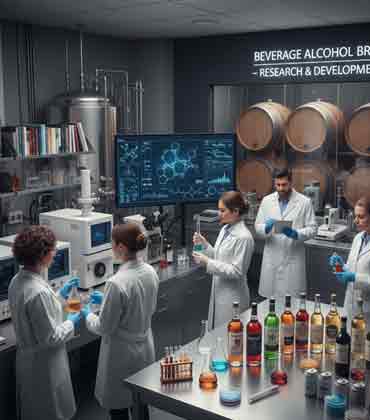
Digital Transformation Is Reshaping the Global Alcohol Industry
The alcohol industry has transformed through digital integration—using AI, IoT, and automation to optimize supply chains, ensure compliance, and deliver hyper-personalized consumer experiences, creating agile, data-driven, and transparent operations.

Cloud-Connected Food Digesters Redefine Organic Waste Operations
Cloud-connected aerobic food digesters are reshaping organic waste management through data-driven operations, integration, and adaptive innovation across sustainability-focused infrastructure.
EDITORIAL
Operational Intelligence Across Food and Beverage Systems
This edition of Food & Beverage Tech Review explores how operational intelligence and accountable technology adoption are reshaping food, beverage, and beverage alcohol ecosystems. As organizations face rising cost pressures, sustainability mandates, and shifting consumer expectations, the focus has moved decisively toward solutions that deliver measurable, operational outcomes.
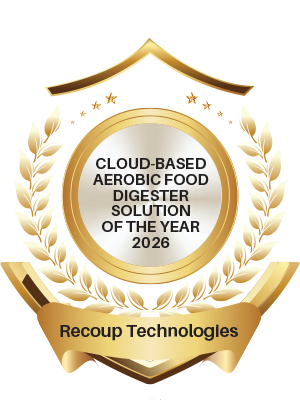
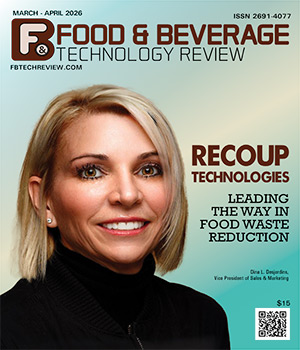
Our cover story spotlights Recoup Technologies, recognized as the Cloud-based Aerobic Food Digester Solution of the Year 2026, for its role in redefining how food waste is managed at scale. Through its BioHiTech aerobic digesters, Recoup addresses food waste at the point of generation, replacing landfill-bound disposal with a closed, on-site process supported by real-time, cloud-based analytics. By transforming food waste into a traceable operational dataset, Recoup enables organizations to reduce emissions, control hauling and storage costs, and document sustainability performance with defensible data. Its sustained deployment across healthcare, education, hospitality, and maritime environments reflects a solution engineered for continuous, real-world operation rather than pilot-stage experimentation.
In the same vein, this issue also recognizes Brandjam as Top Beverage Alcohol Brands Solution 2026. As beverage alcohol distributors expand portfolios and navigate evolving market dynamics, Brandjam’s work supports disciplined brand execution and portfolio clarity. Its recognition underscores the growing importance of structured, technology-enabled approaches that help brands remain responsive without sacrificing consistency or operational control.
Leadership perspectives further contextualize these shifts. Todd Morillo, Director of Sales Technology at Eagle Rock Distributing Company, examines how beverage alcohol distributors are approaching AI adoption with a measured, ROI-driven mindset. He emphasizes incremental automation, workforce alignment, and practical use cases as critical to sustainable transformation.
In parallel, Enrique Leon, AI Enterprise Architect at American Sugar Refining, highlights how cloud-based AI addresses variability and scalability challenges in predictive modeling, reinforcing the role of accessible cloud infrastructure in modern operational strategy.
Collectively, these stories reflect an industry prioritizing operational discipline, data transparency, and long-term resilience. We invite readers to engage with this issue and explore how today’s leaders are translating technology into tangible business value.

Top
