THANK YOU FOR SUBSCRIBING

× 
Food and Beverage Tech Review Weekly Brief
Be first to read the latest tech news, Industry Leader's Insights, and CIO interviews of medium and large enterprises exclusively from Food and Beverage Tech Review

By Nicholas Schuelke, Sr. Manager of Packaging R&D, Dawn Foods Global
The Power of Customer-Centric Packaging Design

By Dariush Ajami, Chief Innovation Officer, Beyond Meat
Engineering the Future of Food through Systems Thinking...

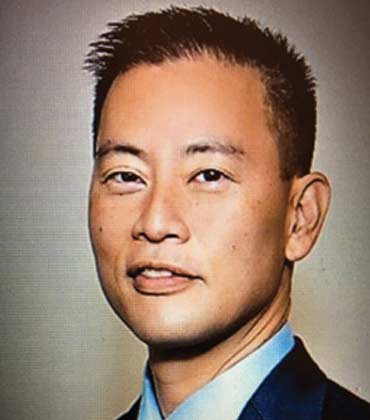
By Takashi Nakamura, Vice President, Fresh Del Monte Produce (FDP: NYSE)
Food Security Challenges: Health-driven and Consumer...

Utilizing Industry 4.0 to Transform Advanced Manufacturing
Mike Lindsey, Director of Manufacturing Systems, Perdue Farms
 Mike Lindsey, Director of Manufacturing Systems, Perdue Farms
As a senior director of manufacturing systems at Perdue Farms, Mike Lindsey provides a manufacturing technology vision that aligns with the company's strategic plans. Define the vision with clarity to facilitate all 23 manufacturing locations. In addition, he ensures that the right talent is in the right roles and is focused on high-payback projects. Lindsey's primary goals are to build a cohesive team and creative environment to offer technology solutions to our manufacturing business opportunities.
What are the food and agriculture challenges when it comes to manufacturing?
With industry 4.0 transformation, companies manufacture, improve and distribute their products using new technologies. In addition, this industrial revolution will collect, use and share data so that the industry can reach new heights in safety and efficiency, driving the sector closer to the ultimate goal of lights-out manufacturing.
The challenge I see here is collecting more data on production processes and understanding where you stand in the industry from a security perspective to help the business understand more, especially with IOT. For example, how do we continue to protect manufacturing from a safety perspective as well as address cyber security issues with technology that might not be upgraded as much as, say, PLCs and SCADA technology. It's important how we use data to drive manufacturing decisions more effectively and efficiently while securing and protecting these systems from cyber concerns.
What technological transformation are you currently witnessing in the manufacturing space?
Our main focus is implementing IoT technology on the floor to capture data and time throughput efficiencies. However, we are also looking for machine learning, AI and computer vision for packaging and to identify problems with the product before it gets to the consumer. In addition, we want smart technology to learn about our products to help us easily transition to new products.
How do other technologies like AI and ML help you drive these data-driven decisions?
We are doing a lot of research and development to have a smart system that learns quickly as it runs the product. Packaging and vision systems validation requires technology that is easy to use, operator friendly and easy to configure and set up and run, which is not easy with some of this technology. Therefore, we constantly modify algorithms and improve how we validate and use vision.
Is there any project initiative that you are currently working on where you are leveraging these latest technologies?
One of our projects is automated deboning machines, where we collect information on how the machine runs and effectively loads. We are focusing on downtime reduction, yield and labor cost reductions by using data analytics and the insights from the machine. It's been one of our very successful operations to know how they're running. With the executive dashboard, they can look at all of their sites that run the deboning operations in one pane of glass. This tool is used by operations to gain insights and improve their process. Management can then take the information to the floor teams for continual process improvement.
Any software tools or solutions you use to ensure that these processes work effectively?
We can visualize any machine data using Microsoft Power BI. The tool can give insights, whether it's an executive dashboard or folks on the floor. It can enable operations to see what's going on across the industry or where they fit within other sites. We also have scoreboards on the plant floor where we share the information with the operators, and then the management can coach for improved operational performance.
What are some of the best practices you currently witness in the manufacturing space?
We're looking at business process re-engineering to understand the problems we have in the manufacturing space and how we can address them using technology. To reduce technology costs, we need to limit custom-built solutions and use off the shelf technology as much as possible. However, if the business requires special customization, we'll do that, but only when there are cost benefits. So, if we're getting a good return on that investment, we will surely do these projects. We should focus on projects that bring the most value to the business.

Read Also

Enhanced Precision Agriculture using Cloud Based AI
Enrique Leon, AI Enterprise Architect, American Sugar Refining Inc
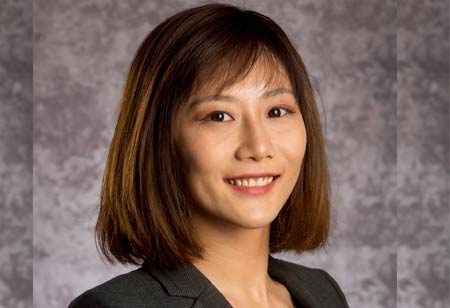
How Cloud Computing Impacts Precision Agriculture Technology
Ruohan Liu, Senior Director, Global Operations, Agriculture Supply Innovation, PepsiCo

Building Durable Growth in Food Systems
Keira Lombardo, Chief Strategy Officer, Cal-Maine Foods Inc

From Roadmap to Reality: Scaling Technology with Purpose
Cameron Fiorini, Vice President of Digital & Technology, Foxtail Coffee CO

Why Restaurant Technology Should Be Designed For People, Not Just Performance
Brianne (Lane) Harvey, Director of Process + IT, Apicii Hospitality

Transforming the Beverage Alcohol Industry
Todd Morillo, Director of Sales Technology, Eagle Rock Distributing Company


Top
