
THANK YOU FOR SUBSCRIBING
× 
Food and Beverage Tech Review Weekly Brief
Be first to read the latest tech news, Industry Leader's Insights, and CIO interviews of medium and large enterprises exclusively from Food and Beverage Tech Review

WPS Fresh
Steven D. Foster, VP Food Safety, Quality
Building a Food System that Can Be Trusted: Leadership Insights from the Field
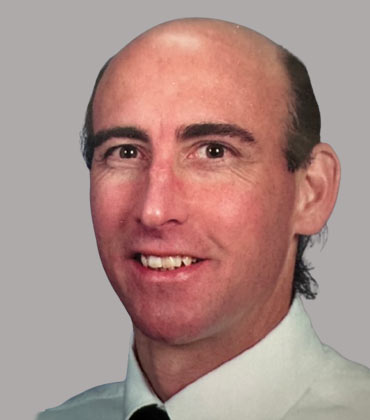
Steven D. Foster
Steven D. Foster is VP of Food Safety and Quality at Wholesale Produce Supply, Founder of the Foster Food System, Founder of Foster Food Solutions Consulting Group, Governor-appointed Chair of the Minnesota Food Safety and Defense Task Force, international keynote speaker and author of From the Fields, a novel based on true events exploring the human cost of food system failures.
Leadership Sets the Culture That Keeps Food Safe Food safety is not a department. It is a culture -- and culture is built or broken by leadership. Over more than two decades working across food safety, quality assurance, supply chain and regulatory compliance, I have learned that the most dangerous thing in this field is complacency. These decisions have real consequences for real people. Not abstractions. Families. Communities. Effective leadership demands systems-level thinking -- one that holds food safety, traceability, sustainability, ethics and public health not as separate priorities, but as a single, integrated responsibility. The chain is only as strong as the values running through it. Closing the Gap Between Policy and Practice The gap between policy, science and practice remains one of the most persistent failures in our field. We have extraordinary science. We have robust regulatory frameworks. And yet the distance between what we know and what is consistently executed -- on farms, in facilities, across distribution networks -- remains far too wide. There is a structural gap that our field rarely discusses openly. In too many small and mid-size food companies, the food safety leader does not have a seat at the leadership table. They report to operations. They report to supply chain. They are consulted after decisions have already been made -- about budgets, production targets, line speeds, new suppliers. This is not a minor organizational detail. It is a culture failure at the highest level. You cannot build a genuine food safety culture from the middle of an organizational chart. Culture flows from the top down. When food safety is not in the room, the culture tells everyone in the organization exactly what the organization values. And it is not safety. As this article goes to press in the summer of 2026, nearly 7,000 cases of cyclospora have been confirmed or are under investigation across 34 states. Taylor Farms has been identified as the potential source. The CDC made cyclospora reporting optional under its FoodNet surveillance program just twelve months ago -- cutting the very infrastructure designed to catch outbreaks like this one early. The people now sick across the Midwest deserved a system that was watching. “Food safety leaders sometimes have to be the voice in the room that says the difficult thing -- about a process, a product, a decision being made for the wrong reasons. That takes courage.” One more thing that deserves to be said plainly. Organic certification is not a food safety guarantee. It speaks to how a product was grown. It does not mean the product is free from pathogens. Cyclospora, Listeria, Salmonella and E. coli do not distinguish between organic and conventional produce. Safe food requires food safety systems. A certification label is not one of them. What Consistent Execution Actually Requires Consistency begins with clarity. Every person in an operation must understand not just what to do, but why it matters. I work across three pillars: people, process and measurement. You need talent genuinely committed to quality. You need processes that are rigorous and practical -- overly complex systems get worked around, and worked-around systems fail. And you need measurement that provides real-time visibility, not lagging indicators that tell you something has already gone wrong. Traceability is the backbone of all of it. If you cannot trace every ingredient from farm to fork in near real time, you cannot respond to a crisis with confidence or earn the trust of the people your product reaches. Traceability is not optional infrastructure. It is an ethical obligation. Never Lose Sight of What Matters Never stop learning -- and never lose sight of why this work matters. Food safety is one of the rare fields where your decisions have a direct, measurable impact on human health and human dignity. Think beyond your organization. The food system is interconnected in ways that make isolation impossible. Your suppliers' problems become your problems. Engage with your professional community. Contribute to public policy. Share what you know -- because the strongest food systems are built on collaboration, not competition. And have courage. Food safety leaders sometimes have to be the voice in the room that says the difficult thing -- about a process, a product, a decision being made for the wrong reasons. That takes courage.The articles from these contributors are based on their personal expertise and viewpoints, and do not necessarily reflect the opinions of their employers or affiliated organizations.

Top
